


Page 130 - ภาษาอังกฤษสำหรับสายวิทยาการอุตุนิยมวิทยา
P. 130
125


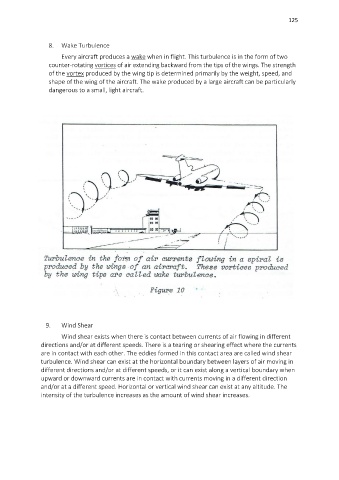
                    8.   Wake Turbulence

                       Every aircraft produces a wake when in flight. This turbulence is in the form of two
                    counter-rotating vortices of air extending backward from the tips of the wings. The strength
                    of the vortex produced by the wing tip is determined primarily by the weight, speed, and
                    shape of the wing of the aircraft. The wake produced by a large aircraft can be particularly
                    dangerous to a small, light aircraft.


                  9.    Wind Shear
                       Wind shear exists when there is contact between currents of air flowing in different
               directions and/or at different speeds. There is a tearing or shearing effect where the currents
               are in contact with each other. The eddies formed in this contact area are called wind shear
               turbulence. Wind shear can exist at the horizontal boundary between layers of air moving in
               different directions and/or at different speeds, or it can exist along a vertical boundary when
               upward or downward currents are in contact with currents moving in a different direction
               and/or at a different speed. Horizontal or vertical wind shear can exist at any altitude. The
               intensity of the turbulence increases as the amount of wind shear increases.

